
Your website is often one of the first places potential customers interact with your business.
A professional website can introduce your services, establish credibility, generate enquiries, support online sales and strengthen your overall digital presence.
But getting a good website depends heavily on choosing the right development company.
With hundreds of agencies and freelancers offering similar services, how do you decide which one is suitable for your business?
Here are the most important factors to consider.
1. Understand What Your Business Actually Needs
Before contacting a website development company, define what you want the website to achieve.
For example, do you need:
- A corporate website
- WordPress website
- WooCommerce store
- Custom PHP website
- E-commerce website
- Landing page
- Portfolio website
- Lead generation website
- Website redesign
Your requirements determine the technology, development time and budget required.
A good development company should first understand your business rather than immediately trying to sell you a package.
2. Check Their Portfolio
A company’s previous work can tell you a lot about its capabilities.
Don’t judge a portfolio only by attractive screenshots.
Open the websites and look at the actual experience.
Check whether the websites are easy to navigate, mobile responsive, visually consistent and professionally structured.
Also consider whether every website looks almost identical.
A strong agency should be able to create designs that suit different businesses and audiences.
3. Look Beyond Website Design
A beautiful website isn’t necessarily a good website.
Professional website development combines design with functionality.
Your website should ideally be:
Fast + Responsive + Secure + Easy to Navigate + SEO-Friendly + Conversion-Focused
Ask the development company how it approaches these areas.
A visually impressive website that takes too long to load or doesn’t work properly on mobile can still provide a poor customer experience.
4. Make Sure Mobile Responsiveness Is Included
A website should work properly across different screen sizes.
That includes smartphones, tablets, laptops and desktops.
Important elements such as menus, buttons, forms, images, product cards and checkout sections should adapt properly to smaller screens.
Mobile responsiveness should be treated as a core development requirement rather than an optional feature.
5. Ask About Website Speed
Website performance deserves attention from the beginning of development.
Poorly optimized images, unnecessary scripts, excessive plugins and inefficient code can make a website heavier than necessary.
Ask whether the company considers:
- Image optimization
- Browser caching
- CSS and JavaScript optimization
- Database performance
- Lazy loading
- Core Web Vitals
- Hosting configuration
Performance optimization can vary depending on the platform and hosting environment, so be cautious of unrealistic promises such as guaranteed perfect scores.
6. Check Their SEO Knowledge
Web development and SEO are different services, but a professionally developed website should provide a solid technical foundation for SEO.
The development team should understand basics such as heading structure, mobile usability, page URLs, metadata support, internal linking, crawlability and website performance.
If organic search is important to your business, discuss SEO requirements before development begins.
Fixing structural problems later can require additional work.
7. Ask About Website Security
Security should be considered during website development.
For WordPress websites, for example, security may involve keeping WordPress core, plugins and themes updated, limiting unnecessary access, protecting login areas and using reputable components.
SSL/HTTPS, backups and appropriate hosting security should also form part of the overall strategy.
No company can guarantee that a website will never face a security issue, but good development practices can reduce unnecessary risks.
8. Understand Who Will Own the Website
This is an important question that businesses sometimes forget to ask.
Clarify ownership of:
- Domain
- Hosting account
- Website files
- Database
- Premium plugins
- Themes
- Images
- Source code
- Analytics accounts
Where practical, important business accounts should remain under the business owner’s control.
You should also understand whether any third-party licenses require ongoing payments.
9. Ask About Post-Launch Support
Website development doesn’t always end when the website goes live.
Over time you may need updates, backups, troubleshooting, security checks, content changes or new functionality.
Ask the company what happens after launch.
Is support included for a limited period? Is ongoing maintenance available? How are additional changes charged?
Clear expectations can prevent misunderstandings later.
10. Don’t Choose Based Only on Price
The cheapest proposal isn’t automatically the best option.
At the same time, an expensive quotation doesn’t guarantee quality.
Instead of comparing only the final amount, compare what each proposal actually includes.
One company may quote only for basic design and development, while another may include mobile optimization, forms, analytics, security setup, performance optimization and post-launch support.
Compare the scope and value, not just the number.
11. Communication Matters
Website development involves regular decisions.
A good development partner should communicate clearly about requirements, timelines, revisions and technical limitations.
Pay attention to communication even before hiring.
If it is difficult to get clear answers during the sales process, project communication may also become difficult later.
12. Avoid Unrealistic Promises
Be careful when an agency guarantees things such as:
“#1 Google ranking guaranteed”
“100/100 speed guaranteed on every page”
“Your website can never be hacked”
“Guaranteed sales after launch”
Professional agencies should explain what they can control and what depends on external factors.
SEO rankings, customer behaviour, advertising performance and security cannot be reduced to absolute guarantees.
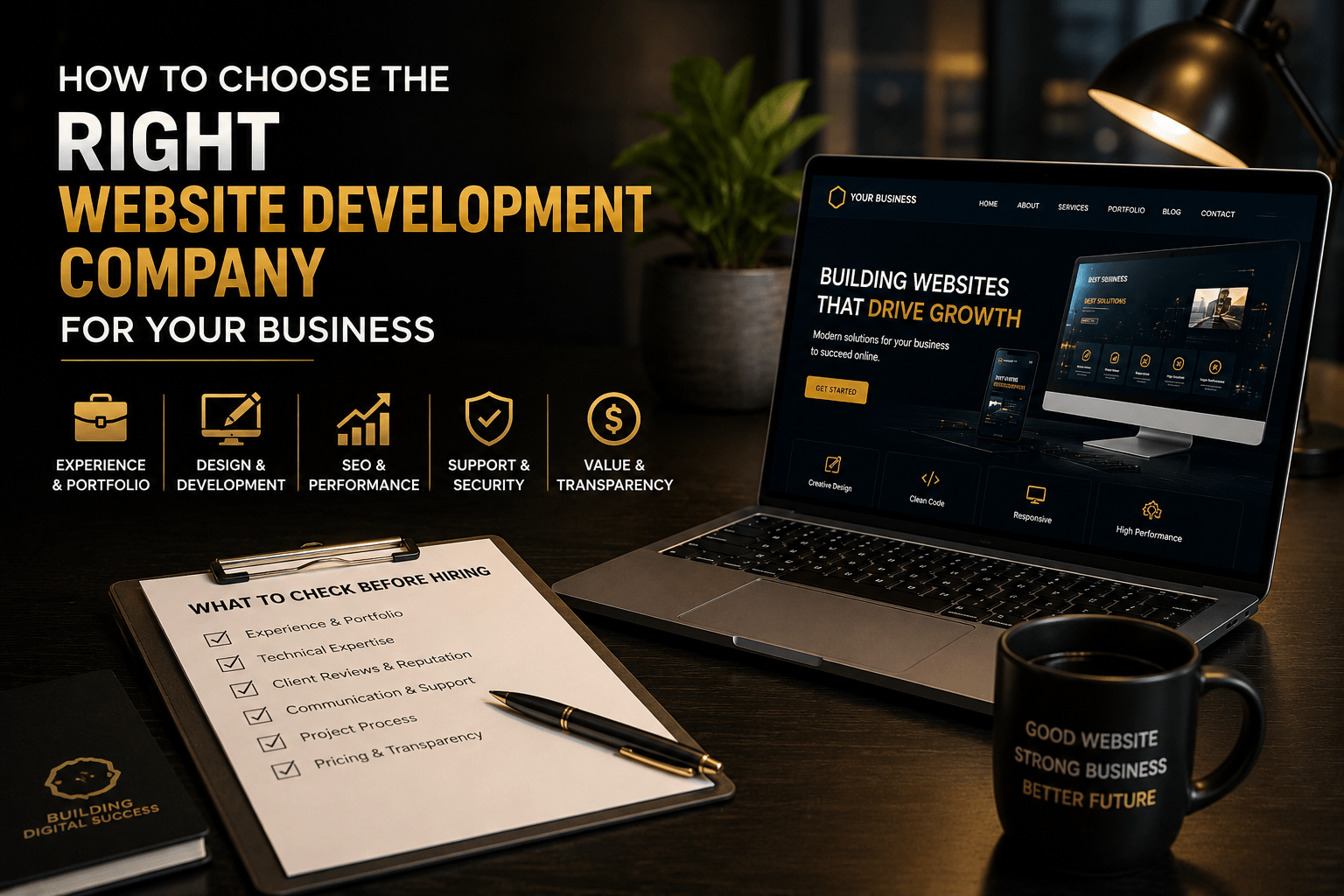
Questions to Ask Before Hiring a Website Development Company
Before finalizing your development partner, ask:
- Which platform do you recommend for my website and why?
- Will the website be fully responsive?
- Can I manage website content myself?
- Who will own the website and accounts?
- Is basic technical SEO considered during development?
- How will website performance be handled?
- What security measures will be implemented?
- Are backups included?
- What happens after the website launches?
- What exactly is included in the quotation?
Clear answers to these questions will make comparing companies much easier.
Why Choose Vranexa for Website Development?
At Vranexa, we focus on creating websites around business requirements rather than simply filling a template.
Our website services can include:
WordPress Development — Flexible websites that businesses can manage easily.
WooCommerce Development — Online stores built around products, customers and checkout experience.
E-commerce Development — Structured shopping experiences designed for online businesses.
PHP Development — Custom functionality for requirements that need more flexibility.
Landing Page Development — Focused pages designed around campaigns and lead generation.
Speed Optimization — Performance improvements for supported websites.
Website Security — Security review and website hardening.
Backup & Support — Backup setup, recovery assistance and technical support.
Analytics & Reporting — Tracking and reporting to better understand website performance.
Final Thoughts
Choosing a website development company isn’t only about finding someone who can write code.
You’re choosing a team that will help create an important digital asset for your business.
Look for a company that understands your objectives, communicates clearly, builds responsive websites, considers performance and security, and provides transparent information about ownership and support.
The right website development partner should help you create something that doesn’t just look professional — it should work for your business.
Ready to Build Your Website?
Whether you need a new business website, an e-commerce store or want to improve an existing website, Vranexa can help you plan and develop the right solution.
CTA Button: Discuss Your Project →
CTA Link: /contact/
Let’s build your high-converting website.
Get a fast, responsive and SEO-ready website designed for real business growth.